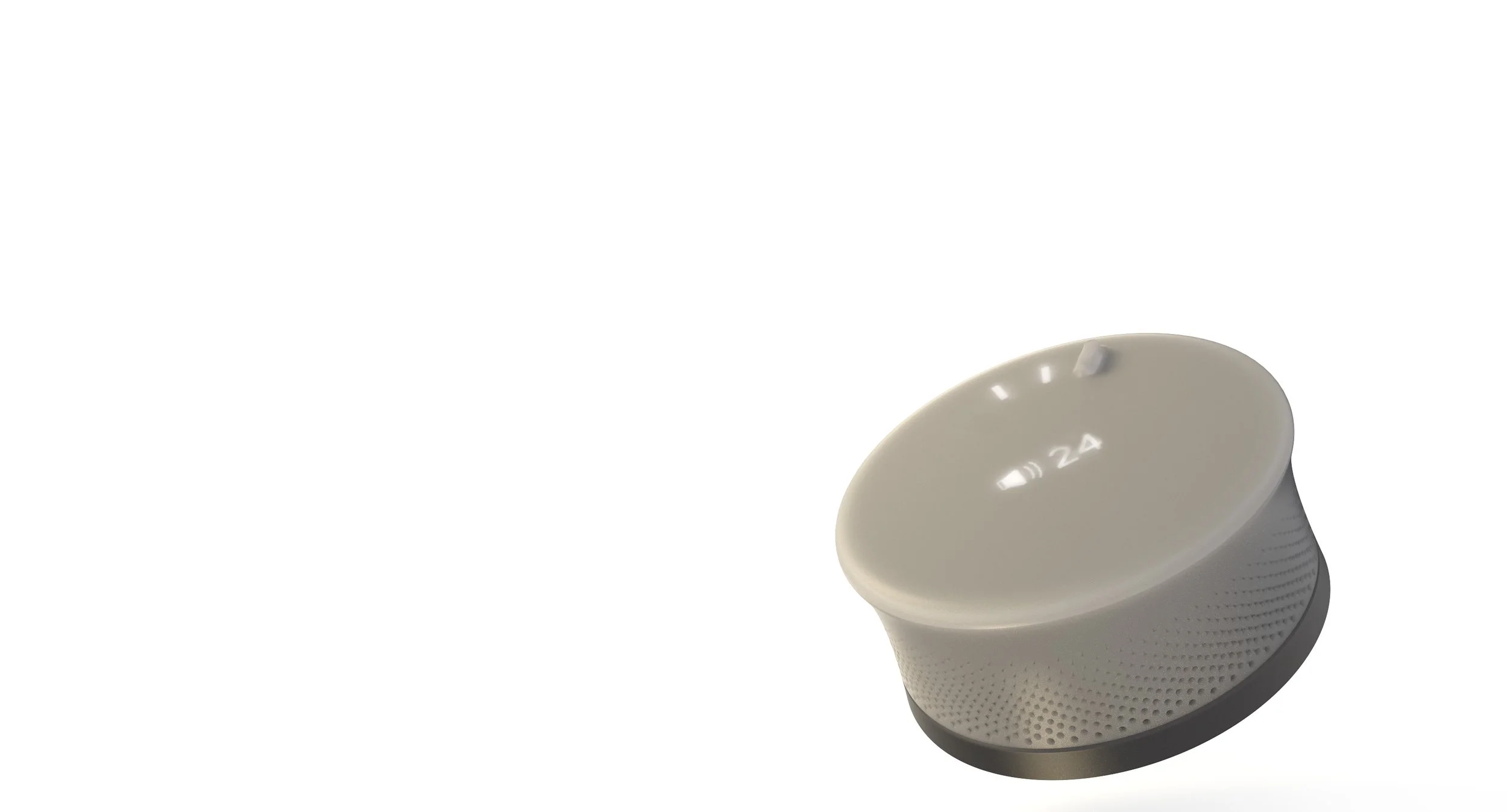

Improving homeowner audio.
Bradley Turner - Industrial Design Thesis
Spring 2021 - Virginia Tech
Mentors - Keith Dandridge and Graham Wilson
Faculty - Martha Sullivan and Elham Morshedzadeh
Improving millennial homeowner audio.
I designed a connected home audio solution in line with the current market and technology, focused on improving the user experience of current solutions.
Click to Play
A single click picks up right where the user left off, getting to the joy of listening faster.
Twist for Volume.
At any time the upper body of dot can be twisted to adjust the volume.
Timer.
55% of users use their smart speaker(s) mostly for setting timers.
A quick double tap and rotate activates the timer, allowing the user to precisely and easily set and start the timer.
Digital Assistant.
A long press launches the user’s digital assistant of choice.
This further reduces frustration by eliminating the unreliable action of vocally activating the digital assistant.
Portability.
85% of users value their audio consumption device to be portable.
Dot achieves this by a magnetic charging dock with pogo pins for effortless wireless charging.
Indicator.
Translucent Polycarbonate body.
The high efficiency OLED screen sits below the translucent polycarbonate top, clearly shining through when powered on, yet invisible when powered off.
Internals.
Dot runs off of three 18650 Li-Ion cells, powering the full range driver to produce clear and powerful audio.
65%
65% of the American Population own at least one smart speaker controlled device.
Smart home device adoption rates are skyrocketing, yet they lack seamless integration and hassle - free use.
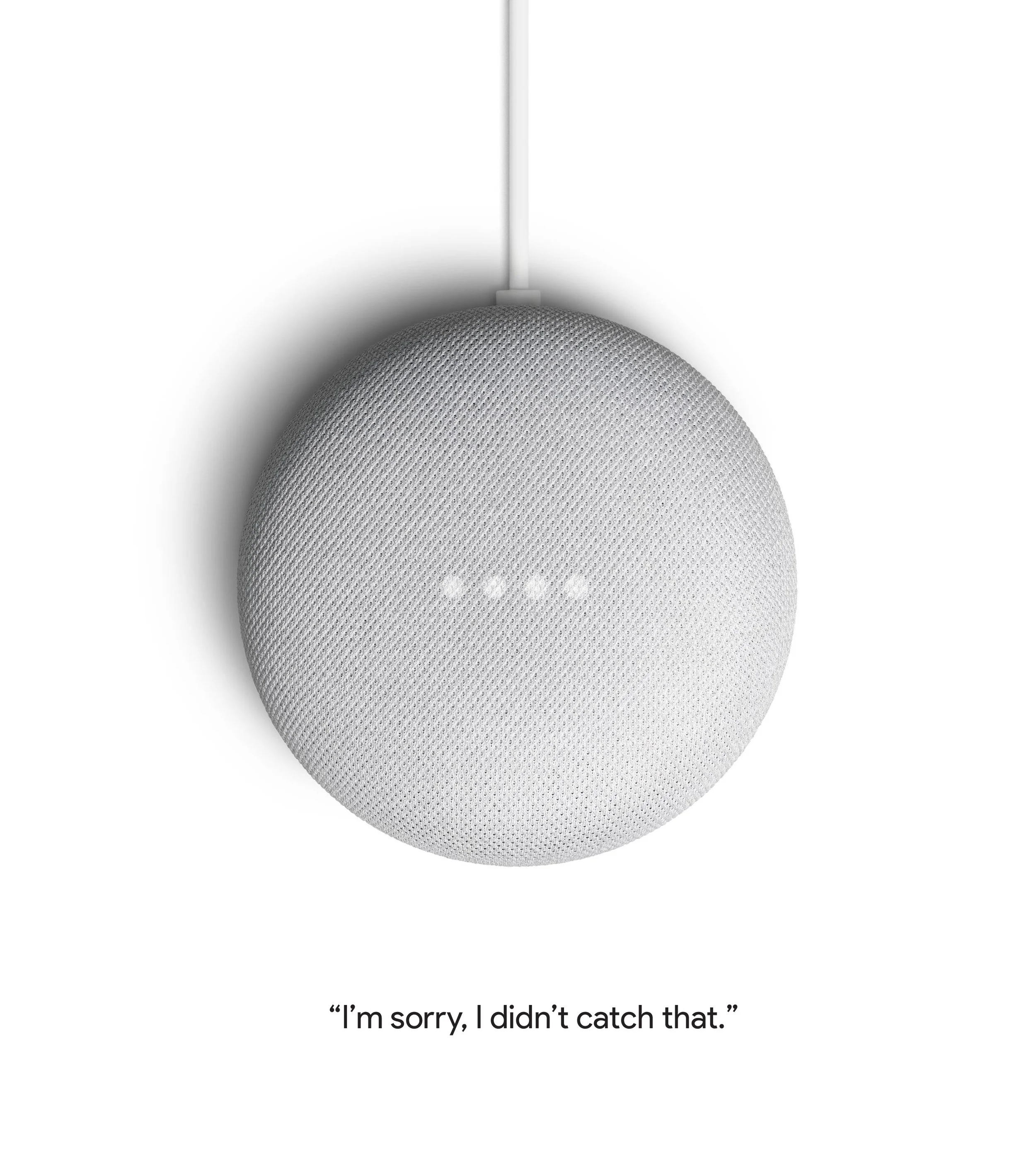
35%
Success Rate.
Vocal interactions with current digital assistants succeed less than 4 out of 10 times.
“65 percent of the time, the [digital assistant] services failed to properly answer (requests from users)”
How might we improve millennial homeowner audio experiences through seamless integration into their busy routines.
Rough Initial Sketch Exploration
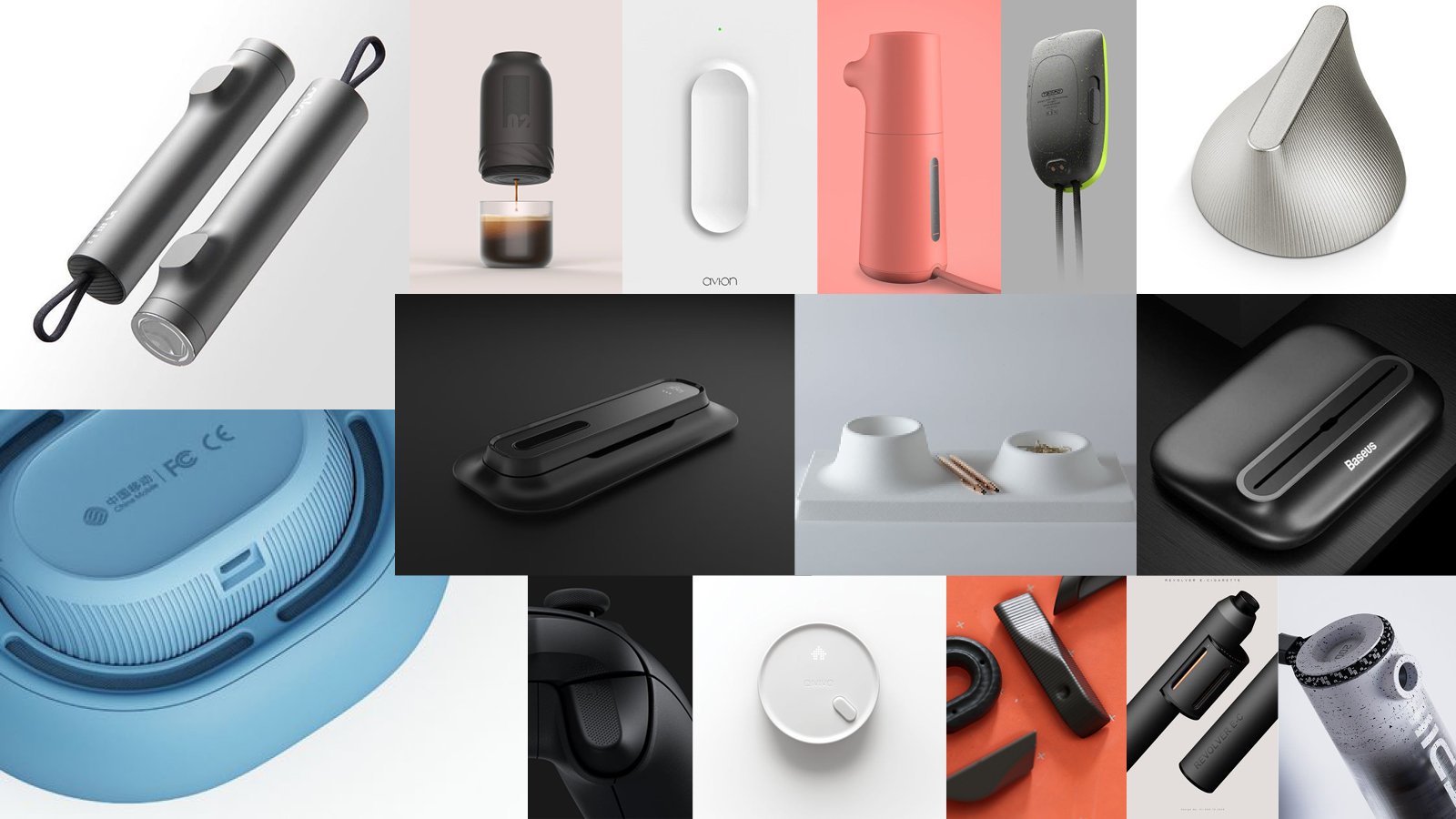
Form Moodboard
Furthered Sketch Exploration
Four concepts chosen to further develop and test.
Study Models
Rough models were made to explore unique interactions we may have with our home audio. These interactions would improve the experience and bring elements of joy into everyday use.
Pursued Direction
The following concept was chosen off it’s ease of use, familiarity to users and success in user testing.
Form Exploration using Adobe Illustrator
Special thanks to Keith Dandridge and Graham Wilson for all their mentoring and volunteer time!